A beginner-friendly explanation of how slots, roulette and blackjack rounds work, including basic rules and responsible-play considerations.

Understanding Online Casino Game Mechanics: Slots, Roulette, and Blackjack
How an online casino game round works
Slots, roulette and blackjack follow different rules, but each round has a clear sequence: place a wager, start play, follow the game’s actions and see the outcome. This beginner’s guide explains the visible steps and common choices in each game. Rules and available options vary between game versions, so always read the on-screen instructions before playing.
Slots: The Sequential Spin Mechanics
The slots game round begins with the input phase, where the player selects their bet level. This typically involves choosing a coin value and the number of active paylines or multiplier setting. For example, a player could set a bet of 0.10 coins per line across 20 paylines, resulting in a total bet of 2.00 coins for that round.
Next is the trigger phase. When the player presses the Spin button, an internal request is sent to the gaming server. Depending on the game’s implementation, a random number generator (RNG) determines a result that the interface presents as reel symbols. The precise timing and technical process vary by provider, and the animated reels do not let players predict or influence the outcome.
The game then enters the round flow with several distinct phases:
- Animation Phase: The reels start to spin visually on the screen, typically one by one. Each reel stops sequentially to reveal the symbol alignment.
- Evaluation Phase: After the reels stop, the system scans paylines according to the game’s payline configuration—commonly left-to-right, but sometimes also right-to-left or cluster pays. It identifies qualifying winning combinations based on the payout table.
- Resolution: Any wins are automatically calculated and added to the player’s credit balance. The interface updates the balance without player input.
- Feature Triggers: If special symbols like Scatters or Wilds appear in triggering positions, the standard spin cycle pauses. In its place, sub-rounds such as Free Spins or Bonus Games begin, each with their own step-by-step interaction mechanics.
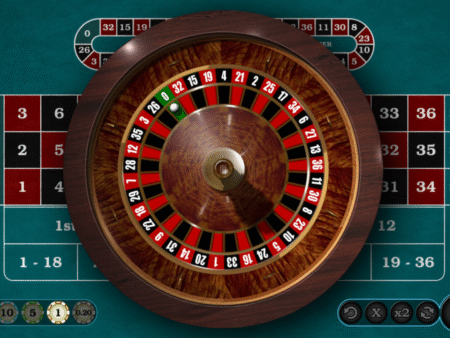
Roulette: The Betting and Resolution Cycle
The roulette round starts with the betting phase. Players typically choose a chip value and select the numbered or colored areas of the betting layout:
- Inside bets: Placing chips on single numbers (straight-up), pairs (split), a row of three (street), or other precise combinations located inside the numbered grid.
- Outside bets: Placing chips in broader categories such as columns, dozens, red or black, odd or even—outside the numbered grid.
After the betting window closes, the dealer or system signals No More Bets. At this point, the input interface disables further user bets, locking in all current bets.
The round flow proceeds as follows:
- Simulation: A digital wheel or live dealer spins the roulette wheel and ball, depending on the game format.
- The Landing: The ball comes to rest in one numbered pocket. The winning pocket is identified once the ball stops; the display and timing depend on the version of roulette.
- Settlement: The system compares the winning pocket number with the player’s active bet placements. Losing bets are cleared from the table, while winning bets are calculated and credited according to the payouts specified for each bet type (for example, 35:1 for a straight-up bet).
Blackjack: Decision-Based Procedural Play
In a typical blackjack round, the player receives two cards and the dealer shows at least one card. Whether the dealer takes a face-down hole card at the start depends on the rules of the blackjack variant.
The core of blackjack interaction is the player decision loop, which proceeds sequentially based on the player’s current hand and options presented:
- Hit: The player requests one additional card. The system deals the card to the player’s hand, then re-evaluates hand totals.
- Stand: The player ends their turn, choosing not to take further cards.
- Double Down: The player chooses to double their initial wager for exactly one additional card. After dealing one card, the turn automatically ends.
- Split: If the initial two cards are a pair, the player may split them into two separate hands, each receiving an additional card. The player then plays each hand independently through the decision loop.
Once the player’s actions conclude, the dealer mechanics commence. The dealer completes their hand according to the table rules, usually drawing until reaching 17 or more. Some variants treat a soft 17 differently. Always check the specific rules before making a decision.
Finally, outcome determination occurs by comparing the totals:
- Player Win: Player’s hand total is higher than the dealer’s without exceeding 21.
- Dealer Win: Dealer’s hand total is higher without busting or player busts over 21.
- Push (Tie): Player and dealer finish with equal totals under the table’s rules. Special cases, including a natural blackjack, may have different outcomes.
Safer-Play Mechanics
Online casino games integrate several user-controlled safe play features accessible through the interface:
- Spending and Time Limits: Some operators offer spending, deposit, loss or session-time limits. Availability and how changes take effect vary. When limits are unavailable, set personal limits in advance and stop when you reach them.
- Reality Checks: Periodic pop-ups remind players of elapsed session time or statistical data about rounds played. This encourages informed time management during play.
- Self-Exclusion and Cooling-Off: Where offered, account-level tools can restrict access for a chosen period. Simply exiting a game is not the same as activating self-exclusion. Consult the operator’s responsible-gambling settings and seek independent support if gambling becomes difficult to control.
Further reading and responsible play
Game rules vary across providers. For a broader explanation of casino platforms, read how online casinos work. For regional background, see our Morocco betting and casino guide.
Gambling involves financial risk and must never be considered a way to earn income. Adults only (18+, subject to applicable local rules). Set affordable limits before playing and seek support if gambling becomes difficult to control.


Popular casino:


100% match bonus up to $250 on the first deposit

Welcome bonus of up to $1,000

Welcome bonus up to $1,200 in bonus funds for new players